
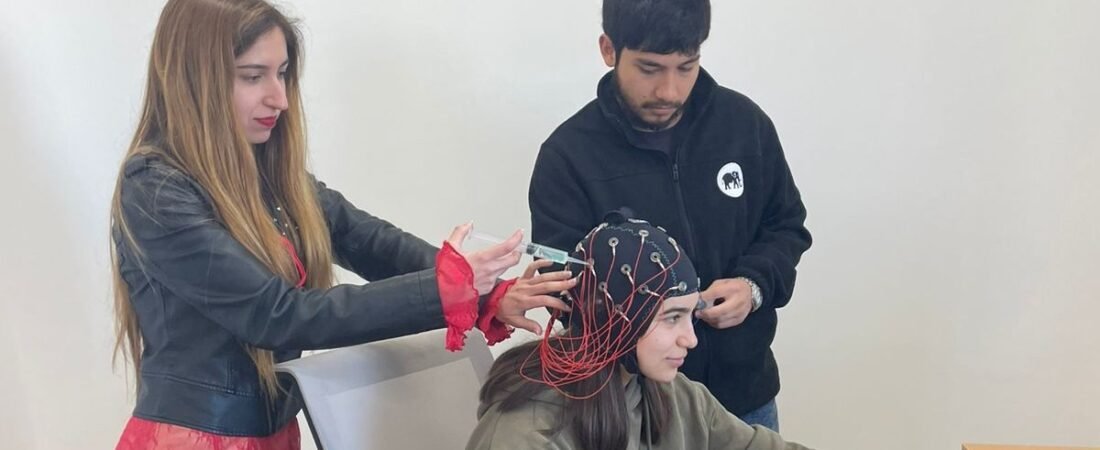
A study led entirely by researchers and students from the Emotion and Social Decisions Lab (ESDLab) at Universidad Adolfo Ibáñez has been published in NeuroImage, marking an important step in the lab’s research development and student training efforts.
The Emotion and Social Decisions Lab (ESDLab) at Universidad Adolfo Ibáñez has published its first scientific paper developed entirely within the lab by its own research team.
The study, titled Mobile EEG as a valid alternative to high-resolution laboratory EEG measures, was recently published in NeuroImage journal, a leading international journal in cognitive neuroscience and neuroimaging research.
This publication reflects ESDLab’s growing capacity to produce high-quality scientific research through collaboration among faculty researchers, early-career scientists, and undergraduate students.
The paper was led by researchers Felipe Rojas-Thomas and Luis Sebastián Contreras-Huerta, alongside an interdisciplinary team that includes Fiorella Macchiavello and José Bórquez, undergraduate psychology students at Universidad Adolfo Ibáñez; Consuelo Ruiz-Moya, lab manager at ESDLab and a psychology alumna of Universidad Adolfo Ibáñez; and researchers Vicente Soto, Álvaro Rivera-Rei, Daniel Franco-O’Byrne, Ricardo Ramírez-Barrantes, and David Huepe.
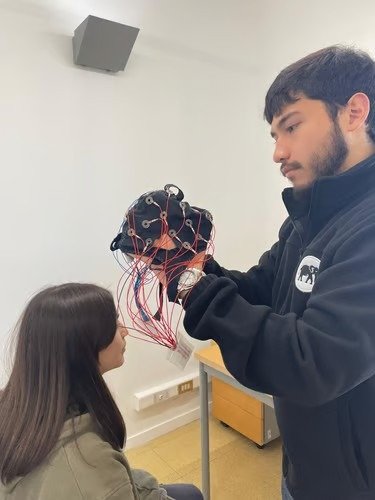
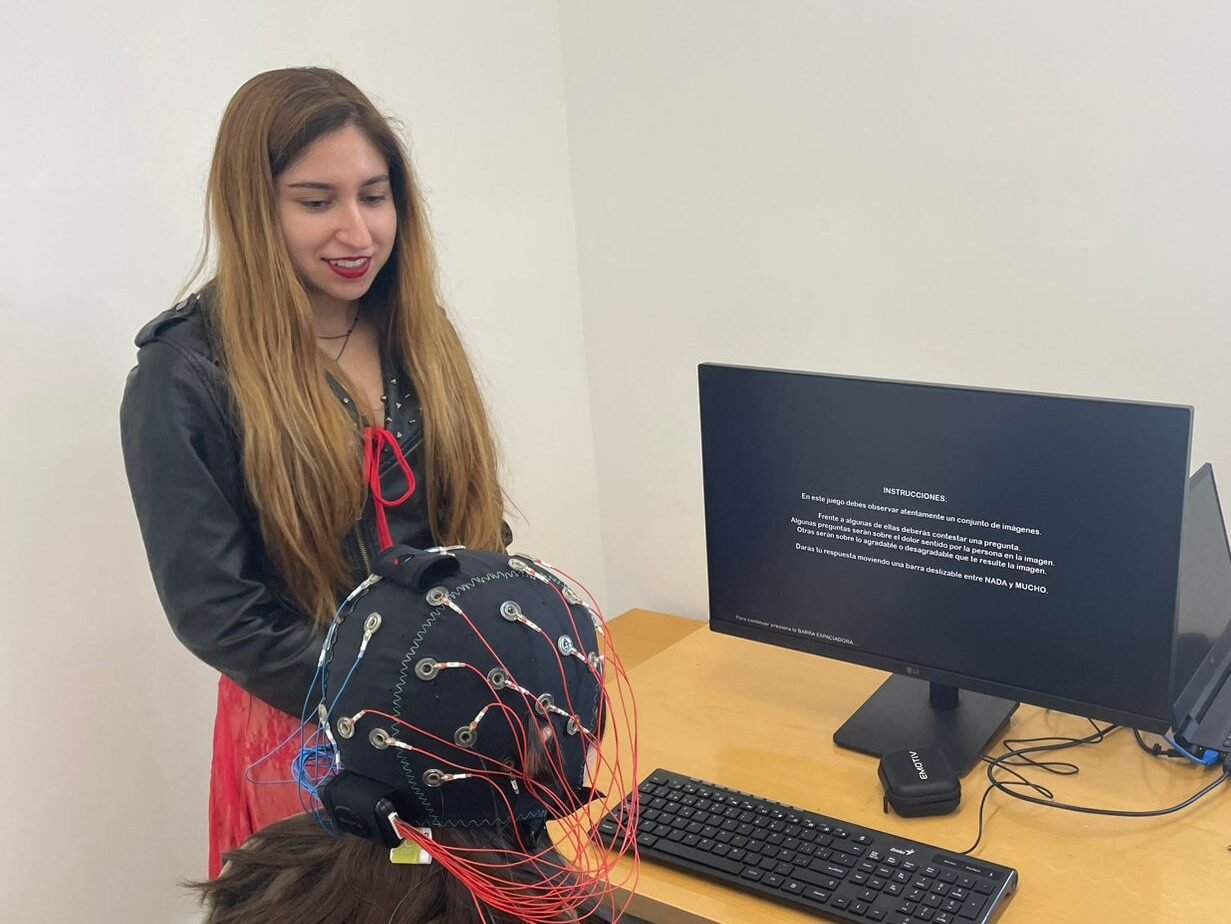
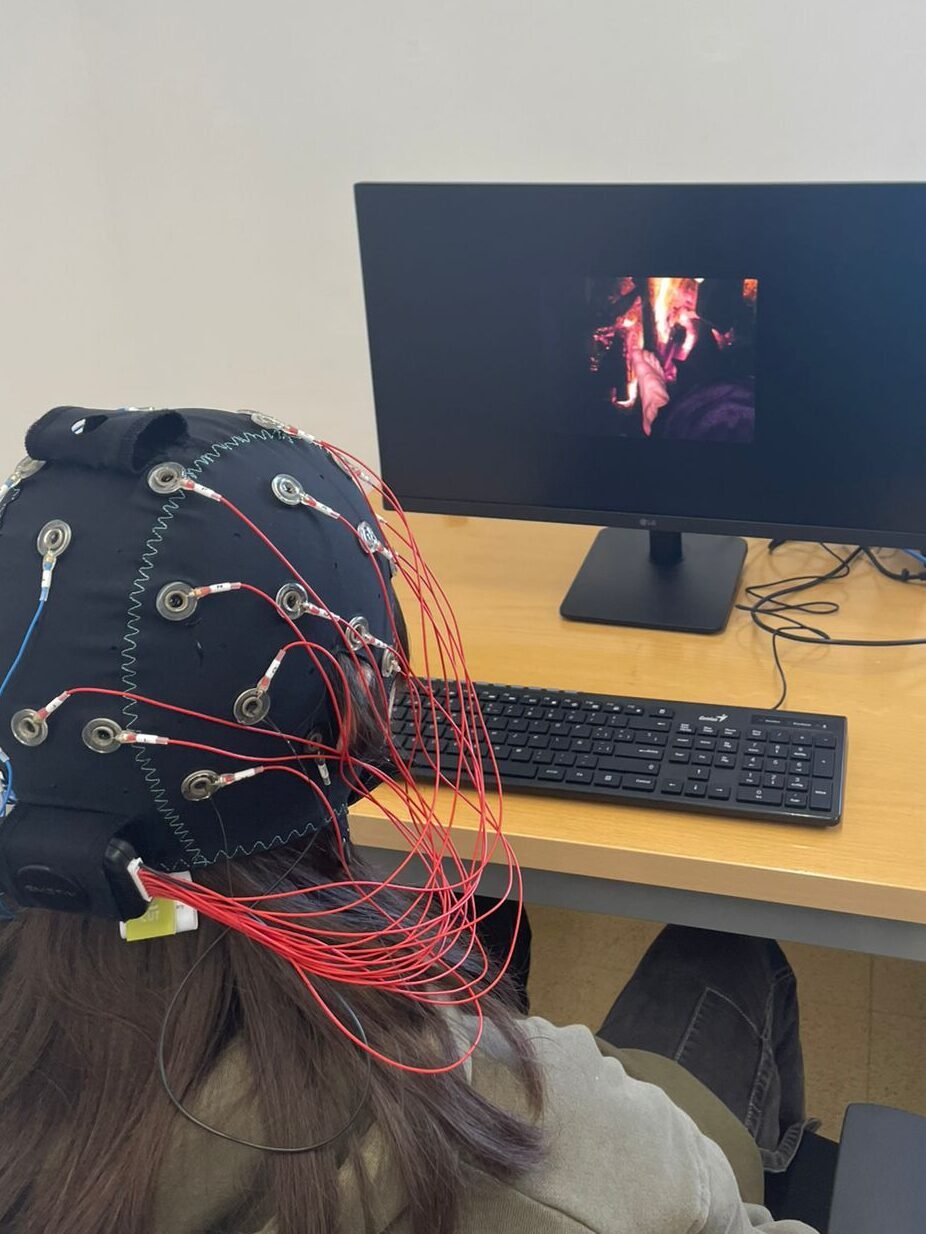
A particularly meaningful aspect of this publication is the active participation of undergraduate students from Universidad Adolfo Ibáñez who have been involved in research training at ESDLab. Their contribution reflects the lab’s commitment to creating opportunities for students to engage in scientific research early in their academic careers.
The study evaluated whether mobile EEG systems can serve as reliable alternatives to traditional laboratory EEG equipment. Using experimental paradigms focused on empathy for pain, researchers found that portable EEG systems can successfully capture neural markers associated with socioemotional processing, opening opportunities for more accessible neuroscience research in resource-limited settings and underrepresented populations.
This publication also aligns with ESDLab’s broader mission of expanding neuroscience research in Latin America through innovative and accessible methodologies that can be implemented beyond traditional laboratory settings.
To further share the study’s findings with a wider audience, José Bórquez, a psychology student at Adolfo Ibáñez University and a member of the research team, also wrote a blog post analyzing the study and its broader implications. View here.
The achievement has been recognized by the School of Psychology at Universidad Adolfo Ibáñez, the Center for Social and Cognitive Neuroscience, and across institutional platforms including LinkedIn, Instagram, X, and UAI News.
As ESDLab continues to grow, this publication reflects the lab’s commitment to advancing neuroscience research while fostering the development of future researchers in Chile and Latin America.
