Luis-Sebastián Contreras-Huerta and Paula Cornejo, faculty members at the UAI School of Psychology, addressed the science of brain aging, well-being, and care in a community conference in Viña del Mar.
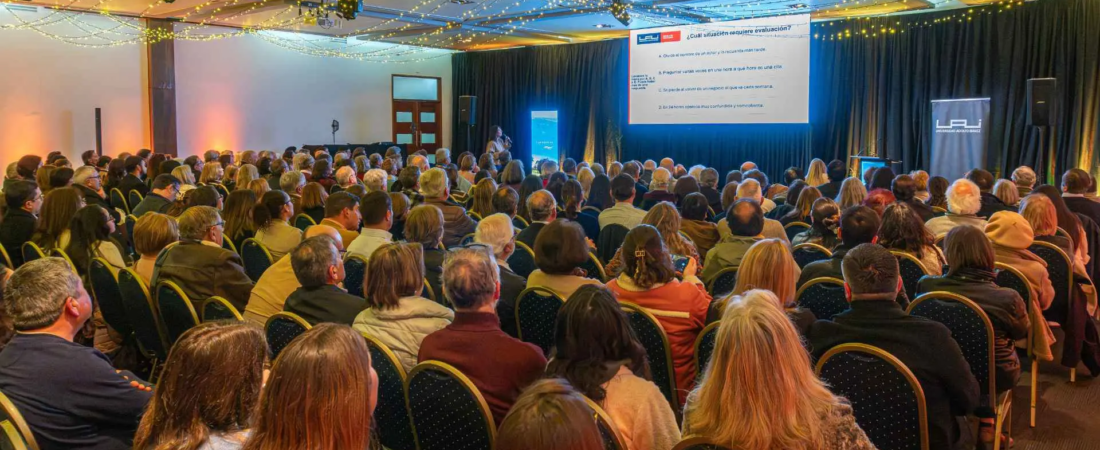
ESDLab Principal Investigator Luis-Sebastián Contreras-Huerta, together with Paula Cornejo from the School of Psychology at Universidad Adolfo Ibáñez, participated in the conference “Brain Health and Aging: How to Prevent, Understand, and Support”, held at Club Naval de Campo Las Salinas in Viña del Mar.
The event was part of the 2026 conference series jointly organized by Universidad Adolfo Ibáñez and Club Naval de Campo Las Salinas and was open to the broader Valparaíso community. The conference addressed one of Chile’s growing social and health challenges: an aging population and the need to better understand how to promote brain health and well-being throughout later life.
Understanding the aging brain
During the first part of the conference, Luis-Sebastián Contreras-Huerta, Principal Investigator at ESDLab and researcher at the Center for Social and Cognitive Neuroscience (CSCN), presented a scientific perspective on how the brain changes as we age.
His presentation explored structural and functional changes that can occur in areas such as the frontal cortex, hippocampus, and white matter, while also highlighting the brain’s capacity to compensate for some age-related changes.
Importantly, aging is not simply a story of decline. Sebastián discussed abilities and processes that can remain stable or even become particularly valuable later in life, including motivation, prosocial behavior, and crystallized intelligence—the knowledge, experience, and expertise accumulated throughout our lives.
He also emphasized the importance of understanding aging as a natural biological process rather than a disease, while promoting preventive strategies that can help preserve brain health and quality of life as we grow older.
Understanding care and well-being
In the second part of the conference, Paula Cornejo, Director of the Center for Studies and Care for People (CEAP) and faculty member at the UAI School of Psychology, approached aging from the perspectives of psychotherapy, care, and well-being.
Her presentation provided practical tools for distinguishing everyday memory lapses from signs that may warrant medical evaluation and emphasized the importance of approaching older adults with patience, respect, and an understanding of their individual needs.
She also highlighted the central role of caregivers. Supporting an older person involves not only attending to their needs and preserving their dignity, but also recognizing the well-being and limits of those who provide care.
Together, both presentations offered an integrated perspective on aging, connecting scientific evidence about the brain with practical tools for promoting well-being, understanding age-related changes, and supporting older adults and their caregivers.
At ESDLab, activities like this are part of our commitment to bringing neuroscience beyond the laboratory and making scientific knowledge accessible to the broader community.
Learn more
Interested in learning more about brain health and healthy aging?
Read the original UAI news article to learn more about the conference.
Watch the conference highlights in the reel shared by Universidad Adolfo Ibáñez on its official Instagram and LinkedIn channels.
Explore Sebastián’s presentation slides for an overview of the neuroscience of brain aging and healthy aging.
Listen to Sebastián’s interview with Radio Bío-Bío, where he discusses healthy aging and how scientific evidence can help us better understand and care for our brains throughout life.
