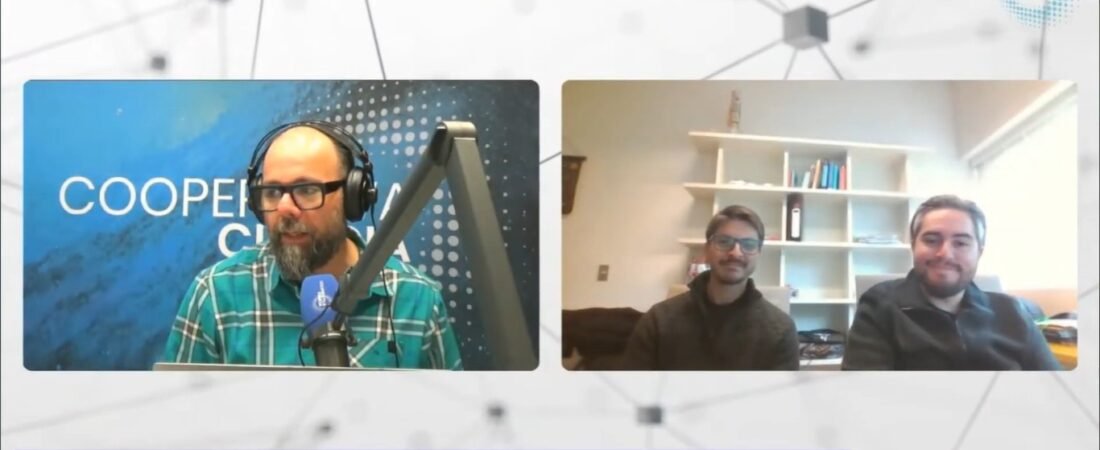
The Emotion and Social Decisions Lab (ESDLab) was recently featured on Cooperativa Ciencia, where Principal Investigators Luis-Sebastián Contreras-Huerta and Felipe Rojas-Thomas discussed the laboratory’s latest publication in NeuroImage on the validation of mobile electroencephalography (EEG) for neuroscience research.
During the interview, the researchers explained how mobile EEG systems can provide a reliable and cost-effective alternative to traditional laboratory equipment for measuring brain activity. Their study demonstrates that portable EEG devices can successfully capture key neural markers of socioemotional processing, opening new opportunities for conducting neuroscience research beyond conventional laboratory settings.
The conversation also highlighted the broader impact of this technology. By making EEG research more accessible and portable, mobile systems can facilitate studies in rural and underserved communities, improve the inclusion of populations that are often underrepresented in neuroscience, and contribute to expanding research opportunities across Latin America. These themes were central to the discussion with Cooperativa Ciencia, where the researchers emphasized the importance of developing high-quality neuroscience that is both scientifically rigorous and accessible.
The interview also explored future applications of mobile EEG in psychology, education, and mental health, as well as its potential to advance research on empathy and other socioemotional processes in real-world contexts.
The study, Mobile EEG as a valid alternative to high-resolution laboratory EEG measures, represents the first scientific publication developed entirely by ESDLab’s own research team and reflects the laboratory’s commitment to advancing accessible neuroscience while training the next generation of researchers.
